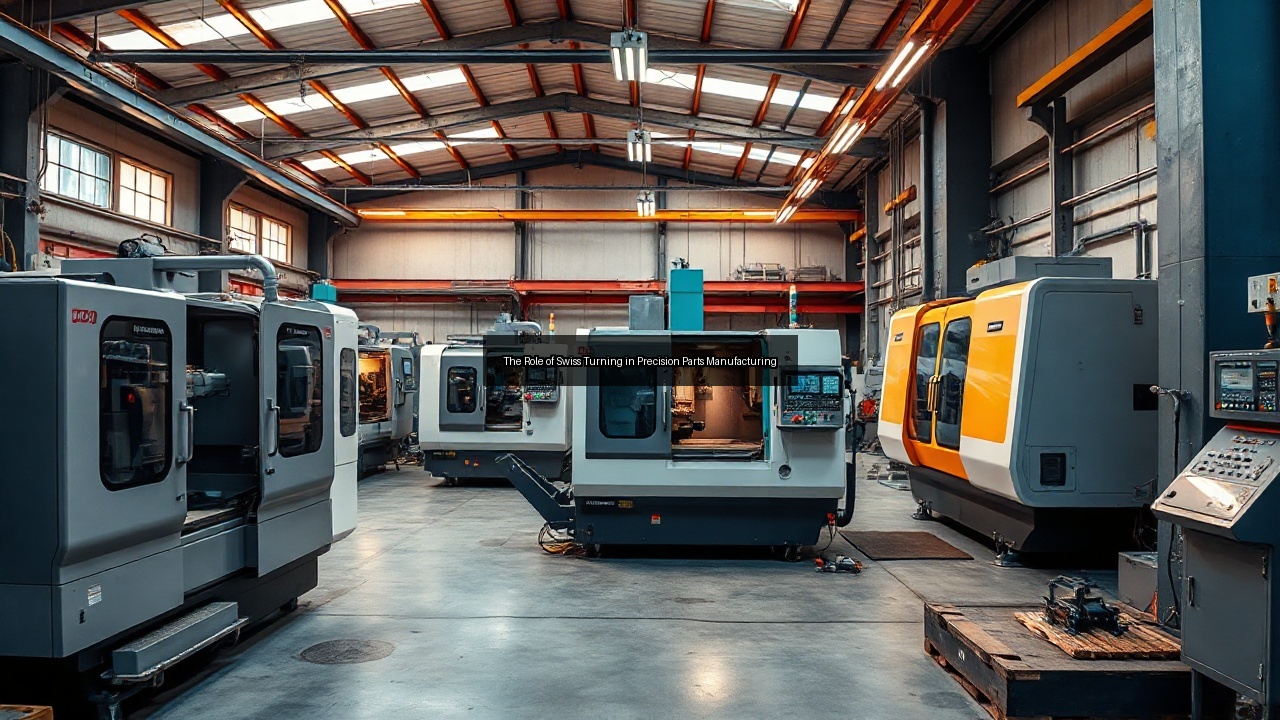
The Role of Swiss Turning in Precision Parts Manufacturing
Understanding Swiss Turning and Its Applications
What is Swiss Turning?
Swiss turning is a highly specialized machining process that excels in producing intricate and precise parts, particularly for industries requiring high tolerances and complex geometries. This technique employs a Swiss lathe, which allows the workpiece to move while the cutting tool remains stationary. This unique setup enables manufacturers to create small, cylindrical parts with exceptional accuracy and efficiency. Swiss turning is particularly advantageous for long, slender components, where the stability of the tool and workpiece is crucial. Unlike traditional lathes, Swiss lathes utilize a guide bushing to support the part as it is machined, reducing vibration and enhancing precision. This method is ideal for producing high-volume runs of precision parts, making it a preferred choice in many manufacturing sectors.
Key Benefits of Swiss Turning in Precision Manufacturing
Swiss turning offers several key benefits that make it indispensable in precision manufacturing. First, it achieves remarkable tolerances, often within ±0.001 inches, which is critical for industries like aerospace and medical device manufacturing. Second, the efficiency of Swiss turning reduces production times. The continuous feeding of the workpiece allows for faster cycles, enabling manufacturers to meet tight deadlines without compromising quality. Additionally, Swiss turning minimizes material waste, thanks to its efficient cutting strategies and the ability to utilize bar stock effectively. The process also accommodates a wide range of materials, including metals like steel and copper, as well as plastics such as PTFE and acetal. These advantages contribute to the growing popularity of Swiss turning services among precision machining companies.
Industries Utilizing Swiss Turning Services
Swiss turning services play a vital role across various industries, each benefiting from the precision and efficiency of this machining method. The medical industry relies on Swiss turning for manufacturing components such cnc turning services as surgical instruments and implants, where precision and biocompatibility are paramount. The aerospace sector also utilizes Swiss turning to create lightweight yet strong parts, including fasteners and housings that must withstand extreme conditions. Automotive manufacturers benefit from Swiss turning in producing small, intricate components like fuel injectors and transmission parts. Additionally, electronics companies utilize this technique for producing connectors and housings that require tight tolerances. Overall, Swiss turning services cater to diverse sectors, firmly establishing their importance in modern manufacturing.
The Swiss Turning Process Explained
Overview of Swiss Lathes and Their Functionality
Swiss lathes, the cornerstone of Swiss turning, are engineered for precision and speed. These machines feature a unique design that supports the workpiece while it rotates, allowing for exceptional stability during machining. The key component of a Swiss lathe is its guide bushing, which provides support to the workpiece close to the cutting tool, reducing deflection and vibration. This design allows for the machining of long and slender parts that traditional lathes struggle to handle effectively. Swiss lathes can accommodate multiple tools simultaneously, enabling various operations like threading, drilling, and milling to occur in one setup. This multi-tasking capability significantly enhances productivity while maintaining high levels of precision. As a result, Swiss lathes stand out in the world of CNC turning services.
Comparison with CNC Turning and CNC Milling
Swiss turning, CNC turning, and CNC milling each have unique strengths, making them suitable for different types of manufacturing projects. Swiss turning excels in producing small, high-precision components, while CNC turning is more versatile for larger parts and broader geometries. CNC milling, on the other hand, is ideal for creating complex shapes and surface features. In Swiss turning, the close support of the workpiece allows for tighter tolerances, making it the go-to choice for industries requiring high-precision parts. CNC turning can also achieve precision but may not match the stability offered by Swiss machines for slender parts. CNC milling provides flexibility in terms of design, enabling manufacturers to create intricate shapes and features. Understanding these differences helps companies choose the right process based on their specific needs.
Importance of Tolerances in Swiss Turning
Tolerances in Swiss turning are critical, as they directly impact the functionality and performance of the finished components. Many industries, particularly aerospace and medical, operate under strict tolerance requirements. Swiss turning can achieve tolerances as tight as ±0.0005 inches, allowing manufacturers to produce parts that fit together seamlessly and function reliably. Achieving these tolerances requires not only advanced machinery but also skilled operators who understand the intricacies of the process. Quality assurance measures, such as regular calibration of machines and thorough inspections, ensure that finished products meet specified tolerances. The ability to consistently maintain these tight tolerances sets Swiss turning apart from other machining methods, solidifying its reputation in precision manufacturing.
Materials and Tools in Swiss Turning
Common Materials Used: Steel, Copper, and PTFE
Swiss turning services accommodate a diverse array of materials, each chosen based on the specific requirements of the end product. Steel is a popular choice due to its strength and durability, making it ideal for components that must withstand high stress and wear. Copper, known for its excellent conductivity, is frequently used in the electronics industry for parts like connectors and terminals. PTFE, a high-performance plastic, is favored for its chemical resistance and low friction properties, often utilized in applications like seals and gaskets. Additionally, acetal is another commonly used plastic that offers strength and stability for various precision components. Each material presents unique machining challenges, and Swiss turning techniques are adept at handling these to produce high-quality parts.
Tools and Technology: From Swiss Lathes to CNC Machines
The tools and technology in Swiss turning have evolved significantly, integrating advanced CNC capabilities to enhance precision and efficiency. Swiss lathes now often incorporate CNC technology, allowing for programmability and automation in the machining process. This integration enables manufacturers to execute complex designs with minimal manual intervention. Various cutting tools, such as inserts and special threading tools, enhance the capabilities of Swiss lathes, allowing for a range of operations from simple turning to intricate milling. The precision of these tools directly affects the quality of the finished product, emphasizing the need for high-quality tooling. As technology continues to advance, the tools and machines used in Swiss turning will likely become even more sophisticated, further enhancing the capabilities of precision manufacturing.
Surface Finishing Techniques in Swiss Turning
Surface finishing is a crucial aspect of Swiss turning, significantly affecting the performance and aesthetics of the final product. Various techniques, such as polishing, anodizing, and coating, are employed to achieve the desired surface quality. Polishing removes any roughness from the machined surface, enhancing its appearance and performance. Anodizing, commonly used for aluminum parts, adds a protective layer that increases corrosion resistance. Coatings, such as those applied to steel components, can improve wear resistance and reduce friction. The choice of surface finishing technique depends on the material and intended application. Effective surface finishing not only improves the component's look but also its functionality, ensuring it meets the rigorous demands of its intended industry.
Quality Assurance and Precision in Swiss Turning Services
ISO Standards in Precision Machining
Quality assurance in Swiss turning services hinges on adherence to ISO standards, which set the benchmark for quality in precision machining. ISO 9001, for instance, focuses on quality management systems, ensuring companies consistently meet customer and regulatory requirements. Compliance with these standards demonstrates a commitment to quality and reliability, essential for industries like aerospace and medical devices. Companies that adhere to ISO standards implement rigorous processes for quality control, including detailed documentation, regular audits, and continuous improvement initiatives. These practices not only enhance the overall quality of the manufacturing process but also build trust with clients, establishing a reputation for excellence in Swiss turning services.
Quality Control Measures in Swiss Turning
Quality control measures are integral to Swiss turning services, ensuring that every part produced meets high standards of precision and reliability. Companies utilize various inspection techniques, such as coordinate measuring machines (CMM) and optical comparators, to verify dimensions and tolerances. Regular calibration of machines and tools is essential to maintain accuracy throughout the production process. Additionally, operators undergo training to recognize potential quality issues early, preventing defects from progressing through the production line. Implementing comprehensive quality control measures not only helps in maintaining ISO compliance but also enhances customer satisfaction by delivering flawless components consistently. Companies like Hogge Precision and McCormick Industries exemplify the commitment to quality that defines successful Swiss turning services.
Case Studies: Hogge Precision and McCormick Industries
Hogge Precision and McCormick Industries serve as prime examples of companies excelling in Swiss turning services. Hogge Precision specializes in high-precision parts for the aerospace and medical sectors, consistently meeting stringent quality standards. Their commitment to quality assurance and advanced machining technologies has solidified their reputation as a leader in precision manufacturing. Similarly, McCormick Industries focuses on delivering customized solutions for various industries, showcasing their versatility and expertise in Swiss turning. Both companies leverage advanced CNC lathes and quality control measures to ensure that every component meets or exceeds client expectations. These case studies highlight the critical role of quality assurance in maintaining competitive advantage in the precision machining landscape.